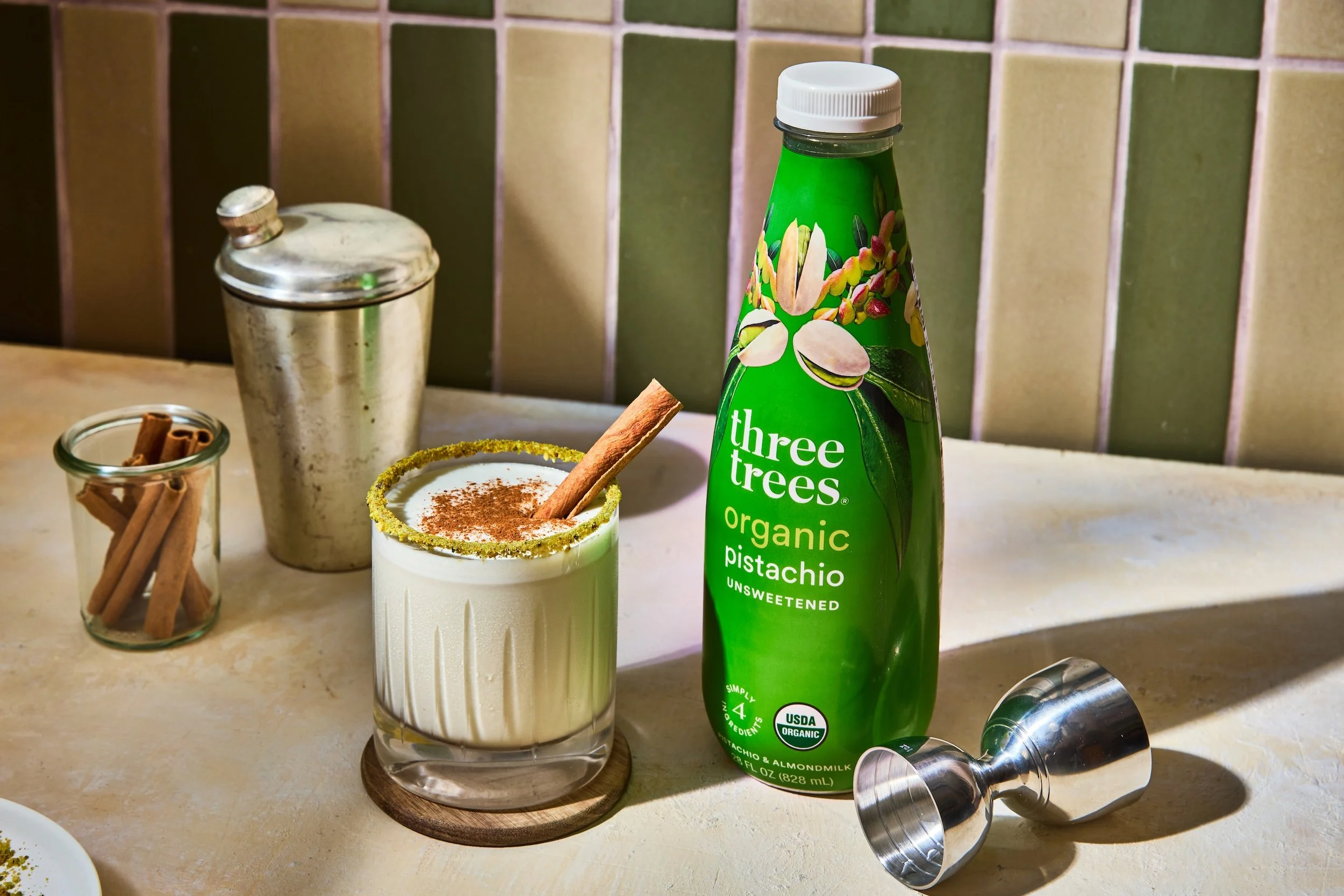
Beyond the Basics: Discover Three Trees Pistachio Milk
Most plant milk shelves are dominated by oat and almond — but Three Trees Pistachio Milk is made from real pistachios, and the difference is immediate.
Walk into any grocery store and the center of gravity is the same: oat milk on one end, almond milk on the other, and a quiet assumption that those two options are the whole story. For millions of people, that assumption has never been questioned. Oat milk is creamy and familiar. Almond milk is light and everywhere. The defaults are comfortable, and defaults have inertia.
But comfort and quality are different things. And the most interesting bottles in the cooler are often the ones you walk past.
Pistachio milk is one of them. It tastes unlike anything else in the category — richer than almond, more complex than oat, with a flavor that actually registers as something distinct. Once you've had it made properly, made from real pistachios, the default choices start to feel like settling.
The catch is that most pistachio milks aren't made properly. Understanding why starts with reading the label.
What Pistachio Milk Actually Is — and Why Most Versions Miss the Point
Pistachio milk, at its most fundamental, is exactly what the name says: pistachios blended with water and strained into a smooth, drinkable milk. The pistachio is one of the most flavor-forward nuts in existence — sweet, savory, and faintly earthy all at once, with a richness that comes from its high fat content and a color that hints at the chlorophyll running through it.
That's the theory. The practice, across most of the category, looks quite different.
Pick up most pistachio milks and read the back of the carton. The ingredient list usually begins with water — reasonable enough — but pistachios often appear third or fourth, after thickeners and stabilizers: gellan gum, locust bean gum, sunflower oil, pea protein, natural flavors. In some products, the pistachio content is low enough that the label qualifies as aspirational branding more than accurate description.
What you taste in those versions is mostly water, stabilized and flavored to approximate a nut. The gums create a texture that reads as creamy. The oils simulate richness. But the pistachio — the actual thing the product is named after — is doing very little of the work.
This is why people who have tried a gum-heavy pistachio milk and found it underwhelming aren't wrong. They just haven't tried one made from real pistachios.
Why Three Trees Pistachio Milk Is Different: Four Ingredients, Real Pistachios
Three Trees Pistachio Milk has four ingredients:
- Filtered water.
- Organic pistachios.
- Organic almonds.
- French grey salt.
That's the complete list. No gums. No seed oils. No fillers. No stabilizers, thickeners, or flavor additives. The pistachios are doing every bit of the work — the creaminess, the flavor, the body — because there are enough of them to do it.
This is what ingredient density means in practice. When you put enough real pistachios into the process, you don't need a support cast of additives. The nut fat creates the emulsion. The natural sugars in the pistachio round out the flavor. The protein contributes body without any help from pea isolates or modified starches. The result is a milk that behaves like milk because the ingredient is doing what an ingredient should do.
The four-ingredient label is not a minimalism exercise or a marketing aesthetic. It's the logical outcome of using real pistachios at a meaningful quantity. The label says what's in the bottle because there's nothing to hide.
When you pour Three Trees Pistachio Milk into a glass, you'll notice the color first: a soft, warm ivory with the faintest green undertone. That's the pistachio showing through. No artificial coloring would produce that specific, muted warmth. It's the color of something made from a real ingredient.
What Does Pistachio Milk Taste Like?
This is the question that matters most to anyone who hasn't tried it — and the honest answer is that pistachio milk tastes like a more interesting version of everything you already like about nut milks.
The flavor is subtly nutty in a way that's distinctly pistachio — not as sharp as walnut, not as sweet as cashew, not as neutral as almond. There's a quiet savory note underneath the nuttiness, a faint earthiness that makes it feel more sophisticated than milks that taste purely of sweetness. The finish is clean and slightly creamy, without the thin, watery aftertaste that follows a low-density almond milk or the heavy, starchy coating of an oat milk.
The creaminess deserves its own mention. Because the fat in Three Trees Pistachio Milk comes from the pistachios themselves, it has a softness and integration that oil-based creaminess cannot replicate. It coats the palate gently without being heavy. It doesn't separate in heat. It doesn't leave an oily ring on the inside of a glass.
In practical terms, this means it performs across a range of uses — hot, cold, frothed, stirred — without requiring adjustments or workarounds. It's not a specialty milk that only works in one context. It's a genuinely versatile ingredient that happens to taste exceptional on its own.
If you've been living on oat and almond for years, Three Trees Pistachio Milk is the discovery moment that resets the category for you. It's the milk you reach for when you want the drink itself to be worth paying attention to.