
Jenny's Story: The Taiwanese Kitchen Tradition That Built Three Trees
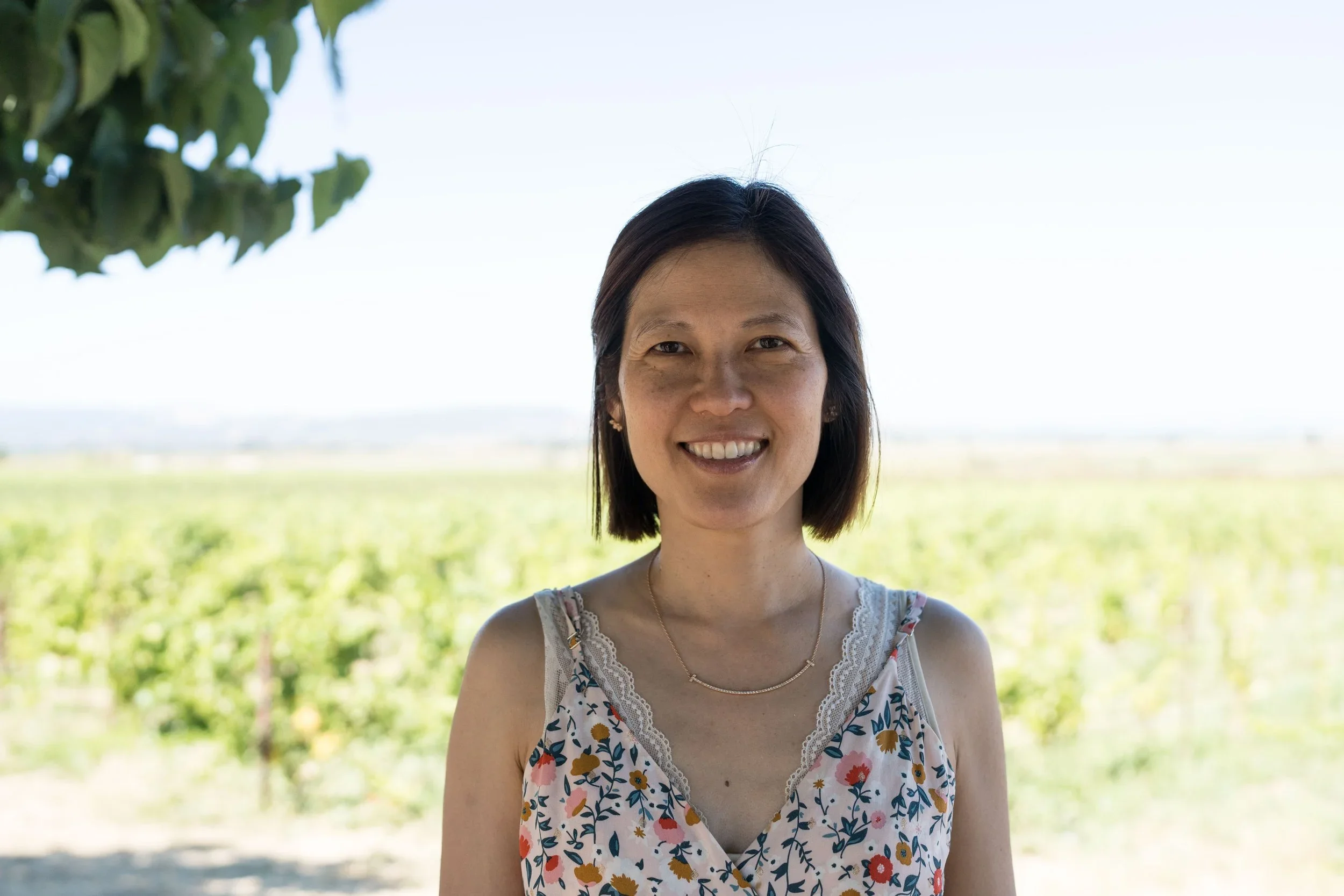
Jenny, Founder & CEO
Jenny came to the United States from Taiwan with a clear idea of what food should taste like — shaped by childhood walks through Taiwanese forests with her grandmother, who treated nature's ingredients as a source of nourishment, not an afterthought. As a mother of three, Jenny applied the same standard to what she put in front of her kids: food that tasted good and was made from something real. When she reached for almond milk on American shelves, neither condition was met. Ingredient lists were padded with thickeners, sweeteners, and stabilizers to compensate for one simple problem: there weren't enough almonds in the carton to produce anything with real body or flavor. In 2012, she started making her own — first at local farmers' markets, then at scale.
That gap — between what almonds actually taste like and what was being sold as almond milk — is where Three Trees began.
13 Years of Pioneering the Clean Label
Three Trees launched more than 13 years ago, before the plant milk category existed as a mainstream concept. Oat milk hadn't crossed the Pacific yet. Almond milk was a niche item at natural food co-ops. A non-dairy milk with serious ingredient credentials — real sourcing, no additives, a short label that meant something — was not a widely held consumer expectation.
Jenny built the company on that expectation anyway.
The founding product — almond milk — was formulated against a simple standard: what would this taste like made at home, from the actual ingredient, without shortcuts? That answer required four times more almonds than leading brands used. Not as a marketing decision. As a recipe decision. If you want something that tastes like almonds, you have to use enough almonds.
The Three Trees Organic Almond Milk label reflects this directly: filtered water, organic almonds, French grey salt. Nothing else. No emulsifiers to fake the creaminess that real almonds provide on their own when used in proper quantity. The short ingredient list isn't minimalism for its own sake — it's what results when the ingredient is doing the work.
That founding logic extended to every product that followed — soy, oat, pistachio — but almond milk is where the standard was set and proved.
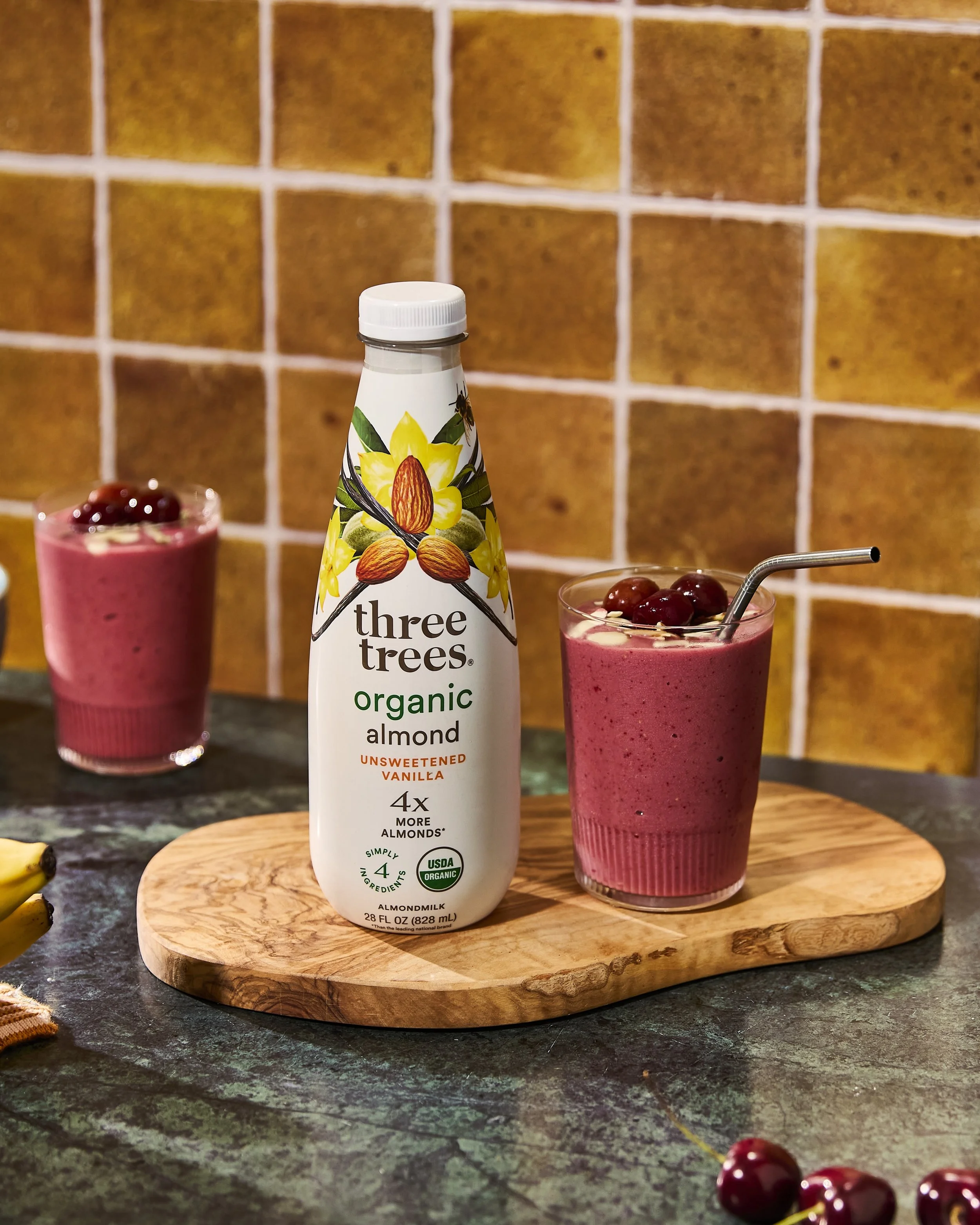
4x More Almonds
Richer. Creamier. USDA Organic Certified.
Thirsty? Find us
Why Ingredients Do the Work
In Taiwanese culture, the connection between food and wellbeing is practical and specific. Ingredients have histories and properties. Preparing food with care — using quality ingredients, taking time — is not treated as a luxury. It's a baseline approach to daily health.
That orientation is built into Three Trees products.
The short ingredient lists exist because a short list means the ingredient is doing the work. If a product requires seven stabilizers and emulsifiers to achieve creaminess, that indicates insufficient base ingredient from the start. Three Trees is designed from the opposite direction: start with enough of the real thing, and don't add what isn't needed.
The guiding principle is straightforward: respect the ingredient, use enough of it, and it will perform as intended.
A Family Business in the Truest Sense
Three Trees is independently owned, bootstrapped, and family-run. That's the operational reality that shapes every decision the company makes, from formulation to pricing.
Independent ownership means product quality isn't balanced against shareholder volume metrics. Every Three Trees product is held to the same standard: good enough to be part of a daily routine, without compromise on ingredients.
That independence also means the formulation doesn't get negotiated down. Every product is held to the same founding standard: enough of the real ingredient, nothing added to compensate for its absence.
Three Trees in Jenny's Daily Routine
Jenny uses Three Trees products the same way she always has — as everyday ingredients, not occasion items. Mornings start with coffee made with Three Trees Pistachio Milk. Lunch might be a pasta dish finished with Barista milk, the same way you'd reach for cream, but without the additives.
The products were built for exactly this kind of use: versatile enough for cooking, good enough to drink straight. That's the standard they're held to.
-
The name comes from the Chinese character ■ (forest), which is composed of three ■ (tree) characters. It's a nod to Jenny's childhood in Taiwan — specifically, foraging walks through the forest with her grandmother, where a close relationship with natural ingredients began.
-
Separation is natural — just shake the bottle. Three Trees doesn't add thickeners, stabilizers, emulsifiers, or fillers, so the milk separates as any whole-ingredient product would. Additives like carrageenan, xanthan gum, and lecithin are what keep conventional milks smooth and uniform. That's not how Three Trees is made
-
Three Trees bottles are made with 100% recycled plastic — no new plastic is created for the packaging. Recycled PET (rPET) is the most widely accepted recyclable plastic in curbside programs, and it's BPA-free. Glass costs more energy to produce and is heavier to ship, which increases the carbon footprint. Three Trees chose rPET as the lower-impact option.
Three Trees is what happens when a founder knows what a real ingredient tastes like and refuses to accept anything less on the shelf. The product is not a wellness trend. It's a daily ritual, made from real ingredients, by a family that uses it every morning.
Three Trees is an independent, family-owned, woman-owned, and Asian-owned organic plant milk company.