
You grab a bottle of plant-based milk at the store. Maybe you're looking for something creamy for your morning latte. Maybe you're cutting back on dairy. Maybe it was just the one on sale.
You glance at the front: organic, plant-based, non-GMO, all-natural. It all sounds right. Into the cart it goes.
What you didn't look at — and almost no one does — is the Nutrition Facts Panel on the back. That small, dense table of numbers is one of the most quietly important things on the package. And for plant-based milks specifically, it tells a story the front label is trying very hard to distract you from.
Numbers are intimidating and half the time we don’t know what we are looking at.
Here's how to read it. And once you do, you won't be able to look at a bottle the same way again.
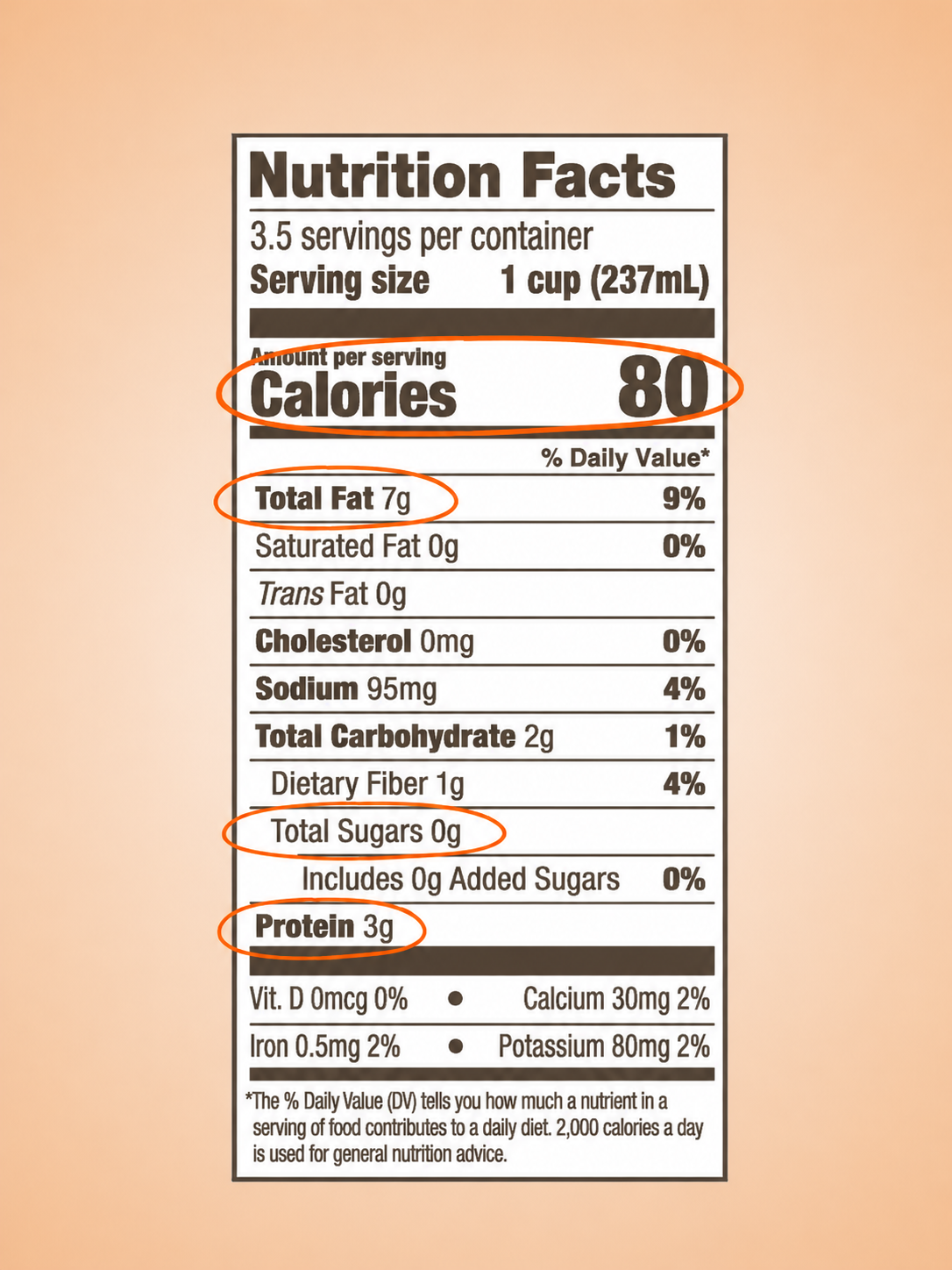
What is the NFP?
The Nutrition Facts Panel isn't just a regulatory checkbox. It's a fingerprint. Every single number on that panel is a downstream consequence of what's actually in the product — the quality and quantity of the ingredients.
More almonds = more fat, more protein, more flavor, more body. Fewer almonds = more water, more additives to fake the texture, weaker numbers across the board.
The label won't tell you the percentage of almonds directly. But it will tell you everything that results from it. Once you know how to read the signals, you can reverse-engineer the quality of any plant-based milk in thirty seconds.
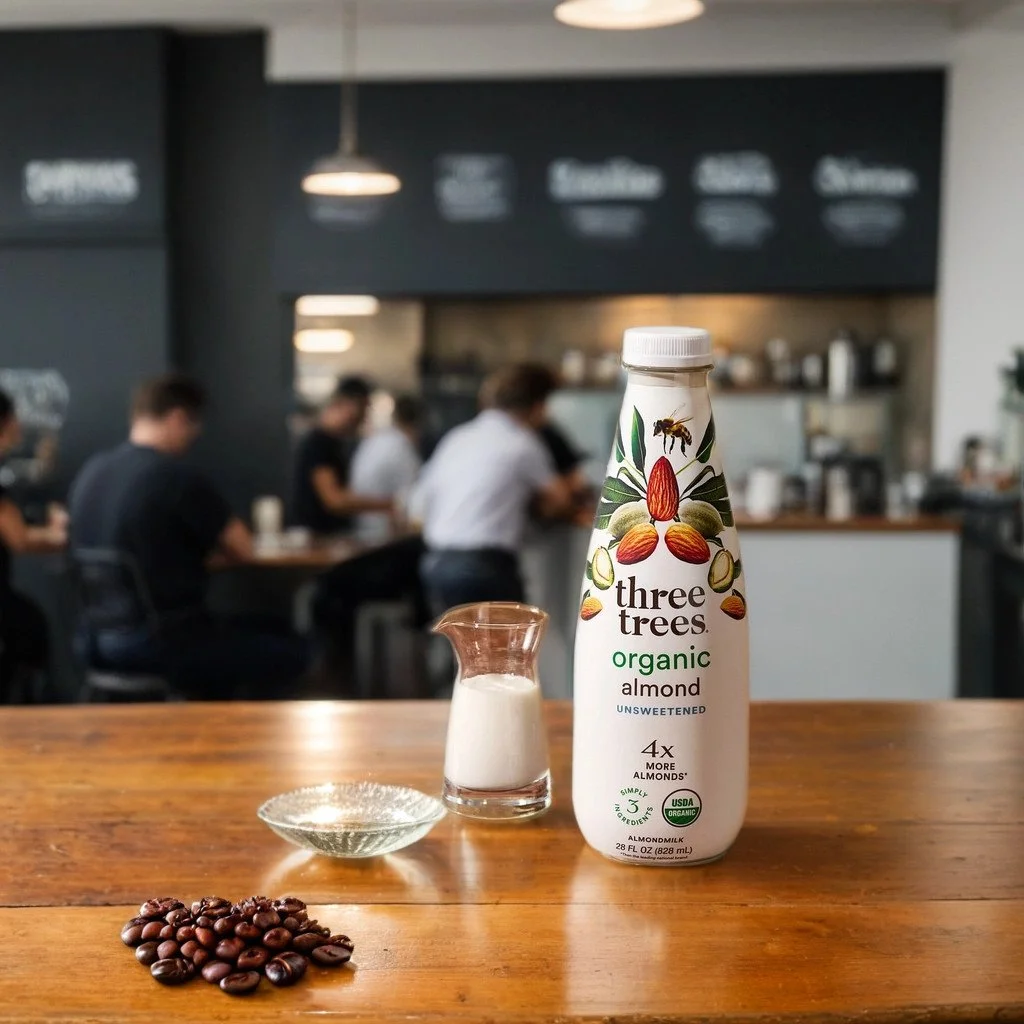
Three Trees - Organic Almond Unsweetened
On your next grocery run...
Pick up a plant-based milk of choice from two different brands.
Fat: which has more?
Protein: which has more?
Ingredients: how many items on the list do you know?
Calories: which is in the healthy range?
You'll often find that the cheaper product has fewer calories, less fat, less protein, and a longer ingredient list. That's not a coincidence. It's the math of dilution.
Most of us spend more time reading reviews before buying a $10 item online than we do reading the label of something we pour into our bodies every morning.
The Nutrition Facts Panel isn't hard to read. It's just been ignored or sometimes, misunderstood. But once you know what fat, protein, and ingredient order are actually telling you, you stop seeing a wall of regulatory text and start seeing a product's priorities laid out in plain numbers.
Flip the bottle. Give it thirty seconds. The milk that wins on the front label versus the milk that wins on the back label are often very different bottles.
Know the Big Five:
1. Total fat (and what kind)
Fat in plant-based milk comes almost entirely from the nut, seed, or grain itself. It is what's naturally present in the almonds, oats, or soybeans that are released into the liquid when they're blended and processed.
A plant-based milk with 3–4g of fat per serving has meaningfully more nut or grain content than one with 1–2g. That's not a small difference. It's the difference between a product built around its hero ingredient and one built around water with a little flavoring.
It's also why creamier milks coat your mouth differently. Fat is what gives milk — any milk — that round, satisfying body. When it's low or absent, no amount of thickeners fully replicates it.
Do you know? Three Trees Organic Almond Milk has 7g of fat per serving. Neighbor brands sit lower. Every extra gram comes from almonds. So that number is telling you something real.
2. Protein
Protein in plant-based milks is another direct signal of ingredient density — especially in almond milk and soy milk, where the protein lives almost entirely in the nut or bean.
Soy milk tends to perform best on protein among plant milks (6–8g per serving in a well-made product but Three Trees serves 12g!!), because soy is protein-dense and the category hasn't commoditized it the same way almond milk has.
What to look for:Compare protein between brands in the same category. Higher protein = more of the actual ingredient. It's that direct.
3. Calories
Calories sometimes confuse people because we've been trained to treat lower as better. In plant-based milks, that instinct misleads.
A very low-calorie plant milk (sometimes as low as 25–30 calories per serving) is almost always a sign of aggressive dilution. Almonds have calories. Oats have calories. Soybeans have calories. If the calorie count is surprisingly low, it's because the nut or grain content is surprisingly low too.
This doesn't mean you should chase high-calorie options. It means that in the 50–90 calorie range for an unsweetened plant milk, you're generally in healthier territory ingredient-wise than something sitting at 25–35.
4. Sugar
This one's straightforward but important. If you're buying unsweetened plant milk, the sugar on the label should be very low — ideally 0g or close to it.
Some brands add sugar under names that don't appear in the "added sugars" line: rice syrup, evaporated cane juice, fruit juice concentrates. If you see these in the ingredient list but the product is labeled "unsweetened," that's a red flag.
It's also worth checking the difference between "original" and "unsweetened" versions of the same brand. The jump is often 7–10g of sugar per serving — about two teaspoons added to every glass, every coffee, every bowl of oatmeal.
5. The Ingredient List
Ingredients are listed in descending order by weight. In a high-quality plant milk, the first ingredient is water, and the second is the actual nut, grain, or legume — and it appears early and prominently.
In a lower-quality product, you'll find the hero ingredient along a lineup of thickeners, gums, oils, and additives that exist to simulate the texture and mouthfeel that real ingredient density would provide naturally.
Look for: sunflower lecithin, gellan gum, locust bean gum, carrageenan, dipotassium phosphate. These aren't necessarily harmful — but their presence in large quantities usually signals that the product needs them because it doesn't have enough of the real thing.
If you have to google an ingredient, it’s probably not good for you..
Three Trees is just more.
Three Trees was built on a simple premise: put more in the bottle.
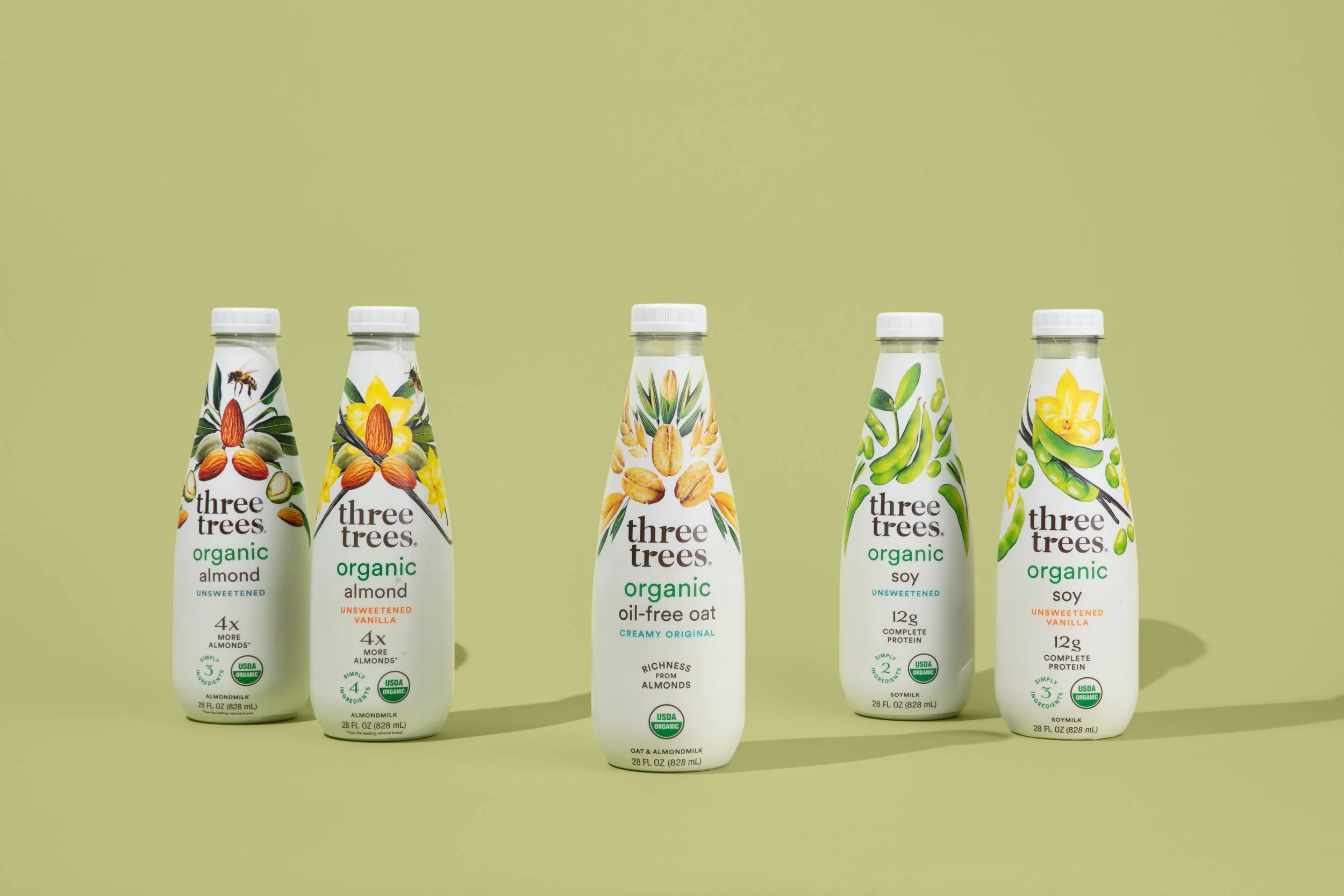
More almonds in the almond milk. More soybeans in the soy milk. More oats in the oat milk. It sounds obvious when you say it out loud — of course a milk should be mostly its namesake ingredient. But in a category where water is cheap and almonds are not, it's actually a choice that most brands don't make.
That's why Three Trees tastes creamier — not because of anything added, but because of what's already there and more. Creaminess in plant milk isn't a flavor note you can fake indefinitely. It comes from fat and protein, which come from the real ingredient.
