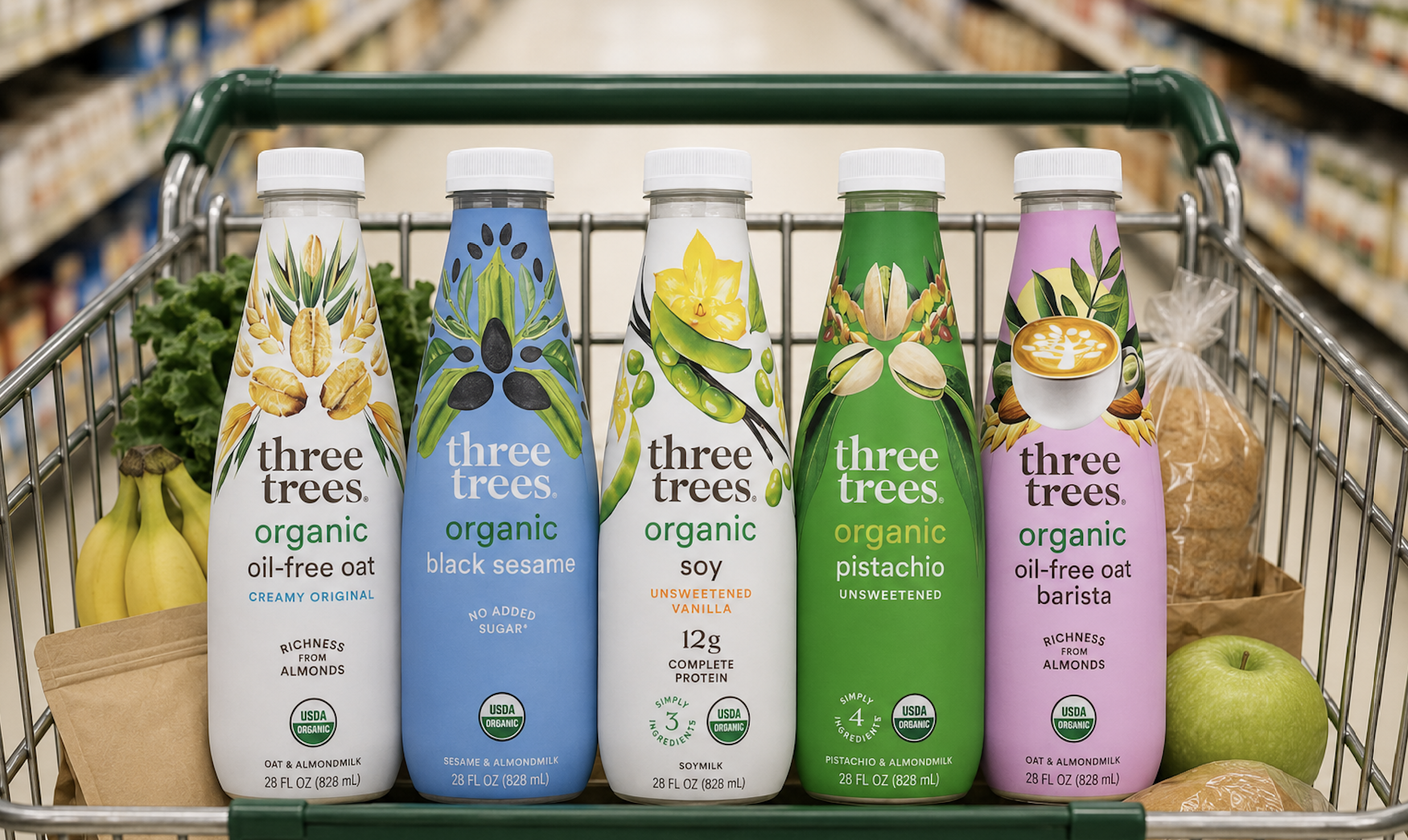
The Three Trees Difference: Why Ingredient Density Matters
Pick up a carton of conventional almond milk, flip it over, and read the ingredient list. You'll usually find something like: water, almonds (2%), sunflower oil, calcium carbonate, sea salt, potassium citrate, locust bean gum, gellan gum. Two percent almonds. The rest is water, oils, and stabilizers doing the work those almonds should be doing.
Three Trees is built on a different premise: use more of the actual ingredient, and you don't need any of the rest.
What Is Ingredient Density?
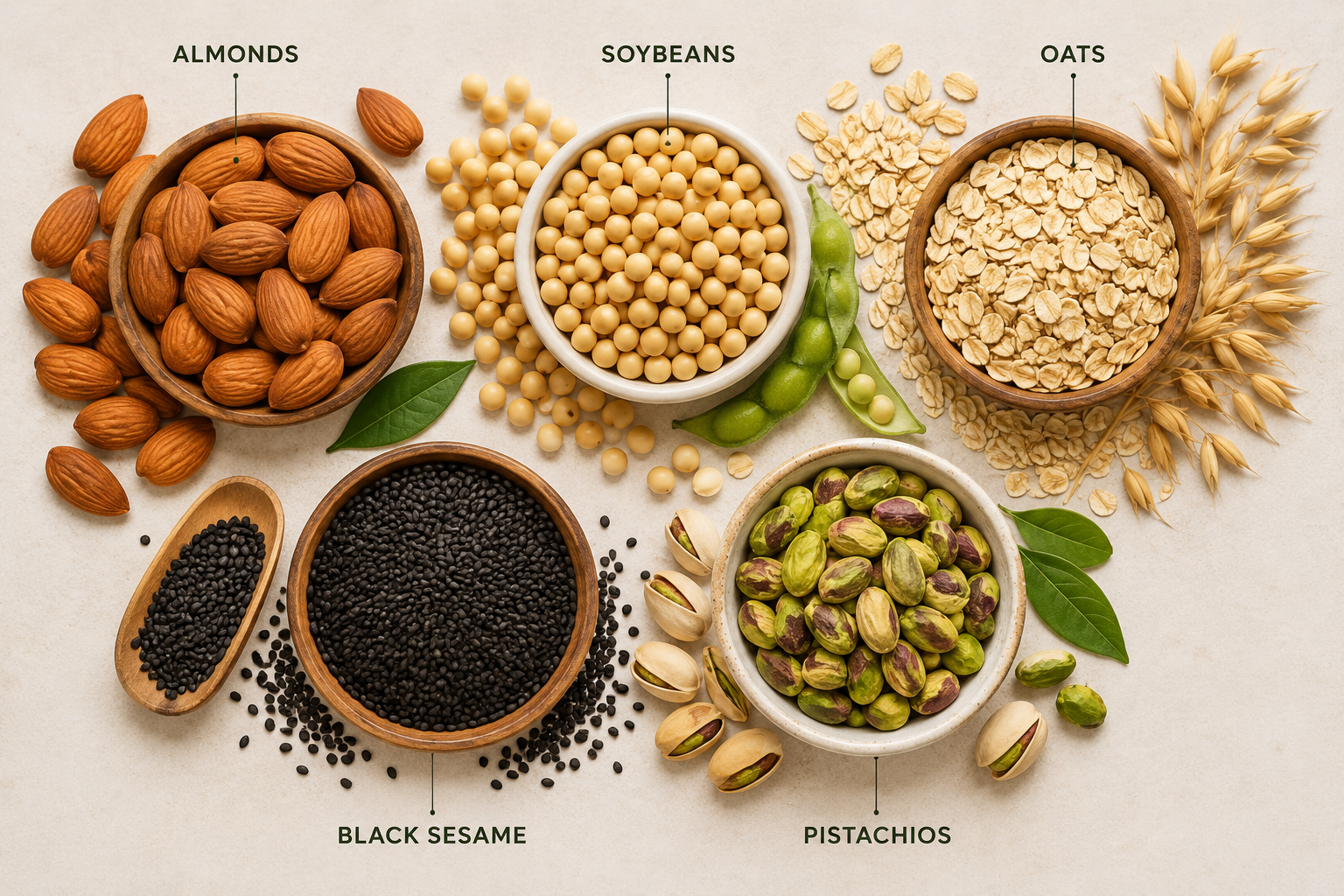
Ingredient density is exactly what it sounds like — how much of the named ingredient is actually in the product. For almond milk, it's the percentage of almonds per serving. For oat milk, it's the amount of oats. For soy milk, it's the proportion of soybeans.
When ingredient density is low, manufacturers compensate. They add oils to simulate creaminess, gums to stabilize texture, and thickeners to give the liquid body. The result is a product that looks like milk but performs like a clever facsimile of one.
When ingredient density is high, you don't need any of that. The almonds bring their own fat, their own protein, their own texture. The ingredient does the work.
Three Trees uses 4x more almonds than a leading competitor's almond milk. That's not a rounding difference. That's a fundamentally different product.
Why Creaminess Comes From Almonds, Not Oil
Fat creates creaminess. That's the physics of emulsion. The question isn't whether to have fat in your milk — it's where that fat comes from.
In low-density almond milks, the creaminess often comes from added oils: canola, sunflower, rapeseed. These oils are functional — they coat the palate, simulate richness, and prevent the drink from tasting watered-down. But they're not what's on the label. You bought almond milk. You got oil with almond flavoring.
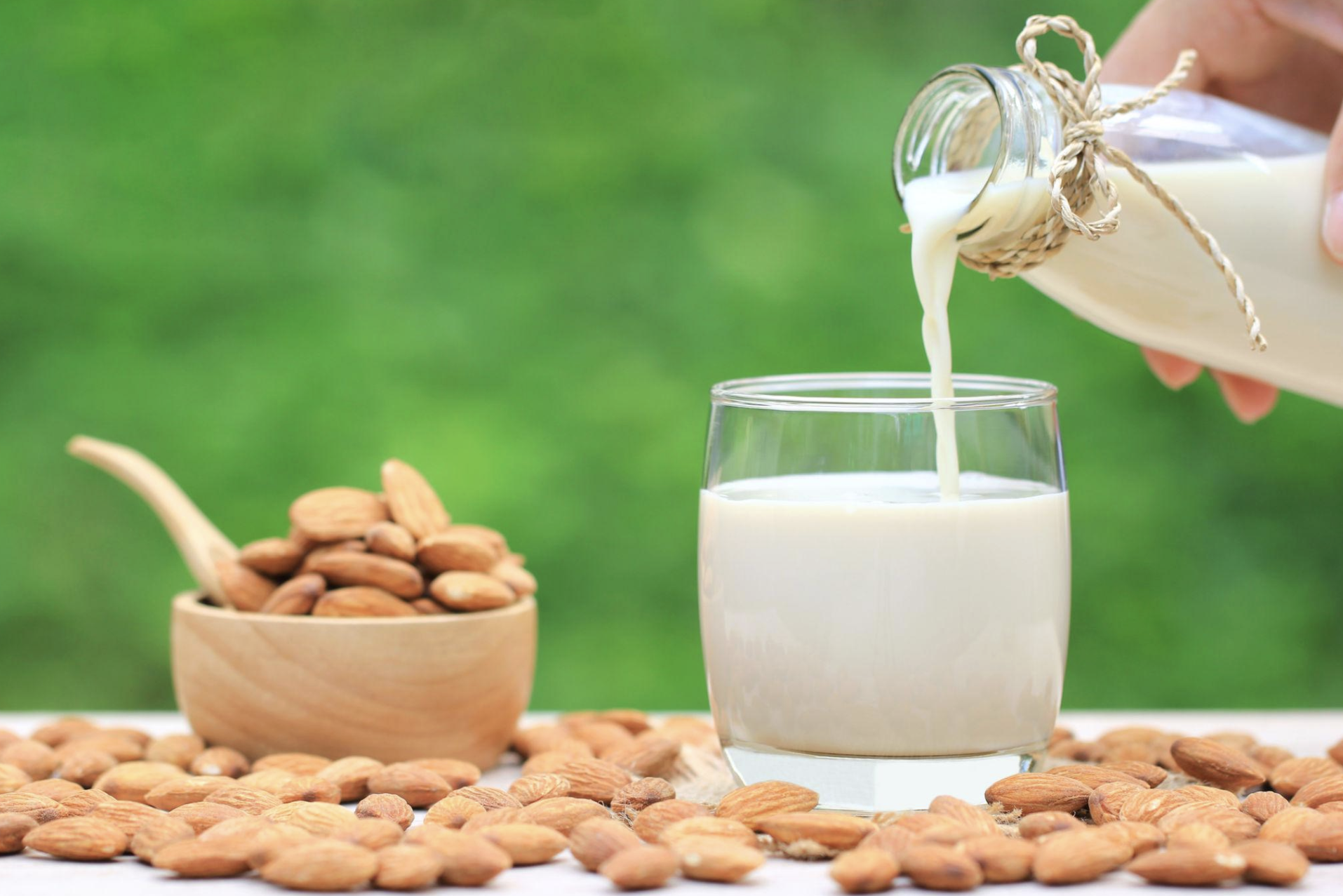
In Three Trees, the creaminess comes from the almonds themselves. Almonds are 50% fat by weight — a natural emulsifier that integrates with water to create a stable, rich, smooth milk. No additives required. What you taste is what the label says.
High-ingredient-density plant milks behave differently because they're made with more real ingredients and fewer additives. Since Three Trees doesn't use stabilizers or emulsifiers, the almond milks naturally separate over time. The almond fats rise and gather into a layer of almond cream on top—similar to cream-top dairy milk.
That layer may look surprising, but it's a sign of what's not in the bottle. Rather than relying on additives to keep everything perfectly uniform, we let the almonds behave naturally. A quick shake brings it all back together, preserving the rich flavor and heart-healthy fats that come from real almonds.
How to Use Ingredient Density as Your Buying Filter
The next time you're standing in the plant milk aisle, flip the carton. Look for:
Where does the named ingredient rank?
It should be first or second on the ingredient list (after water). If almonds appear third or later, the product is mostly something else.
How many additives are there?
Every gum, oil, and stabilizer is a sign that the base ingredient isn't doing its job. Real ingredient density doesn't need a support cast.
Is there added oil?
Sunflower oil, canola oil, rapeseed oil — these are red flags, not neutral additions. They're there because the named ingredient isn't.
Am I paying for ingredients or fillers?
When comparing products, which one appears to deliver more real food per serving?